The short answer
An asset protection permit is a council permit that many Victorian councils require before building work starts. It protects public assets such as footpaths, kerb and channel, vehicle crossovers, nature strips, drains and street trees. The applicant, usually the owner or builder, typically pays a permit fee and often a refundable bond, and the assets are checked before and after the works. Damage that isn't shown to be pre-existing can be charged against the bond.
Key takeaways
- Each council sets its own rules through its local laws, so check yours first.
- Record the frontage assets before any work, delivery or demolition starts.
- A dated before record is the best protection for your bond.
- The permit is an approval; a condition record is the evidence.
If you're building in Victoria, you'll probably hear about the asset protection permit before you hear about anything else. It's how council asset protection works in practice: making sure the footpath, kerb and nature strip outside your site are left the way they were found. The permit itself is simple. The part that costs people money is proving what was already damaged before the works started.
Asset protection permits: quick facts
- Issued by
- Your local council, under its local laws
- Who applies
- Usually the owner or builder doing the works
- Costs
- A permit fee, often plus a refundable bond; amounts vary by council
- Timing
- Before works start; check how much notice your council needs
- Evidence
- Dated photos or a condition record of the frontage assets
- At the end
- A final inspection, then the bond is refunded or used for repairs
What does an asset protection permit protect?
The council-owned assets in the road reserve around your site. The exact list varies by council, but it usually includes:
Footpaths
Concrete or asphalt paths along the frontage, which crack under trucks, bins and plant.
Kerb and channel
Concrete or bluestone kerbs and the channel beside them, often damaged at site entries.
Vehicle crossovers
The driveway crossing between the road and the property boundary.
Nature strips and street trees
Turf, trees and tree root zones, which suffer when vehicles park or materials are stockpiled.
Drains and pits
Stormwater pits, grates and drainage that can be blocked or cracked during works.
Roads, laneways and signs
Road surfaces, laneways and street furniture near the site and its access.
When do you need an asset protection permit?
Usually before building work that could affect council assets. Triggers and thresholds differ between councils, so treat this as a guide and check your council's requirements before you lodge:
- New houses, units and townhouses, including knock-down rebuilds
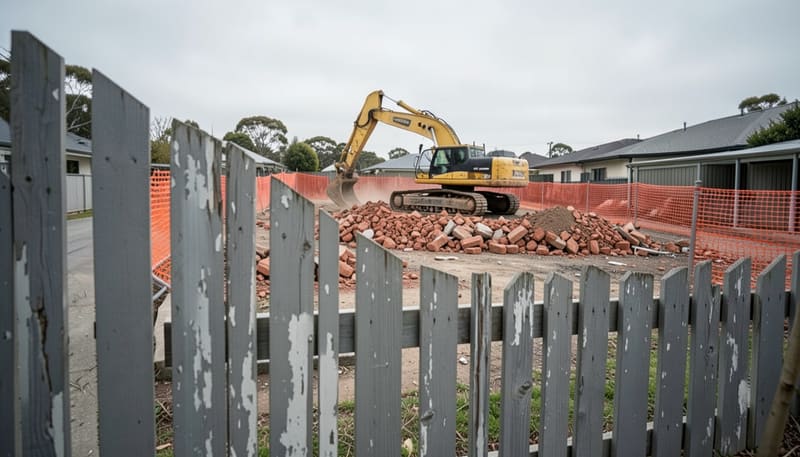
- Demolition, where trucks, bins and machinery use the frontage
- Extensions and major renovations that need a building permit
- Swimming pools, where excavators and spoil trucks cross the footpath
- Large deliveries, cranes or concrete pumps working from the street
Local laws, not one state rule
Asset protection permits come from each council's local laws, so the triggers, fees, bonds and inspection steps vary across Victoria. They're separate from the protection work process in Part 7 of the Building Act 1993, which deals with neighbouring property, not council assets. This is general information, not legal advice.
How does the asset protection permit process work?
Most councils follow the same broad pattern. The order matters: the condition record has to come before anything touches the frontage.
- Before you lodge
Check your council's requirements
Find your council's asset protection page or local law and note when a permit is needed, how much notice it requires, the fee and any bond.
- Before any work starts
Record the council assets
Before any work starts, take dated photos or commission a condition record of the footpath, kerb and channel, crossovers, nature strip, street trees, drains and road at the frontage.
- Before works start
Apply and pay
Lodge the application with the details your council asks for, pay the permit fee and any bond, and keep the permit on hand during the works.
- During the works
Protect the assets during works
Keep vehicles, skips and stockpiles off nature strips and footpaths where the permit says so, and use approved crossings for site access.
- When works finish
Request the final inspection
When works finish, tell the council so the assets can be inspected, and compare their condition with your before record.
- After the final inspection
Settle the bond
If there's no new damage the bond is usually refunded; if there is, it's repaired or the cost is taken from the bond under the council's rules.
The first truck ends your baseline
Once a demolition crew, skip bin or excavator has crossed the footpath, you can't prove what it looked like before. Record the assets as soon as your start date is set.
What photos and condition records do councils ask for?
Usually a dated record of the council assets at your frontage before works start. Some councils inspect the assets themselves; others ask the applicant to provide photos. Either way, your own record is what protects you if the final inspection finds damage. A useful record covers:
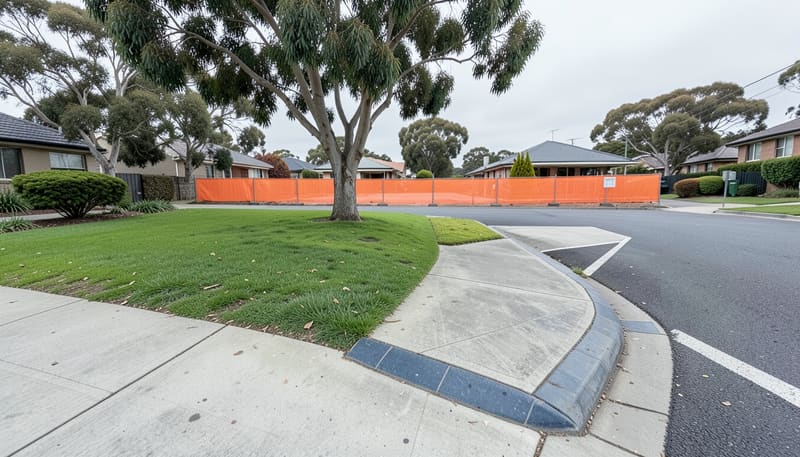
- Wide shots of the whole frontage from both directions, plus a little beyond each side boundary
- The footpath, slab by slab, with close-ups of every crack, lifted edge or patch
- Kerb and channel, including laybacks at the crossover
- The vehicle crossover and the road surface in front of the site
- The nature strip and street trees, including any existing damage to the turf or tree
- Drainage pits and grates in or near the frontage
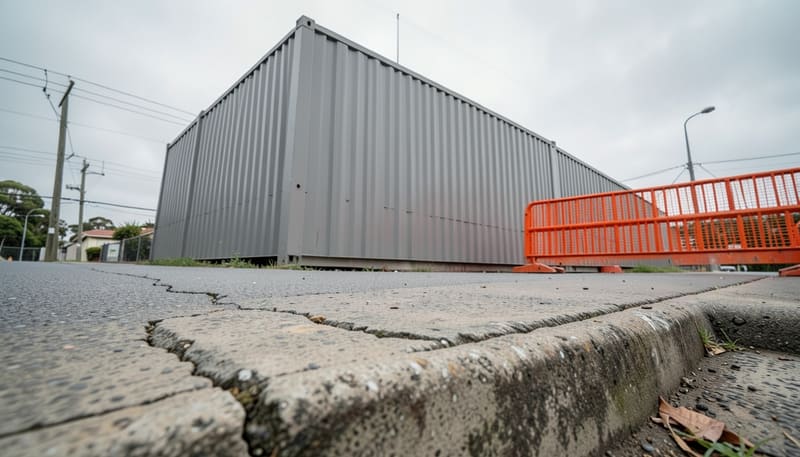
How to take condition photos that hold up
Do
- Keep the original, dated files, not screenshots
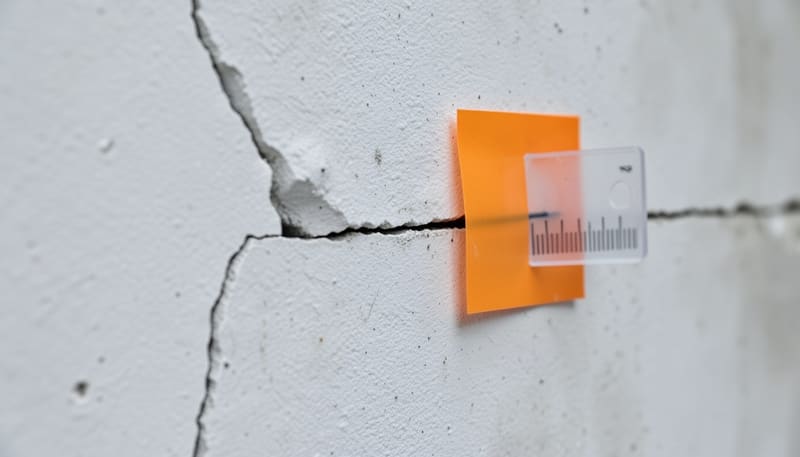
- Include a tape or ruler for scale on close-ups
- Show each defect in a wide shot and a close-up
- Note where each photo was taken from
Don't
- Wait until the first delivery or demolition
- Photograph only your own boundary width
- Skip the nature strip, trees and pit lids
- Rely on the council's records alone
Who pays for an asset protection permit?
The applicant, which is usually the owner or the builder doing the works. Councils typically charge a permit fee, and many also hold a refundable bond or security deposit against damage to their assets. Fees and bonds vary by council and often by the type or value of the works, so check your council's current fees and charges. Read more about who pays for dilapidation reports, which follow a similar logic: whoever carries the risk of the works usually pays for the record.
How do you get your asset protection bond back?
By showing the assets are in the same condition as before the works. The steps usually run like this:
Works finish
Tell the council the works are complete and ask for the final inspection.
Final inspection
The council checks the footpath, kerb, crossover, nature strip and other assets.
No new damage → bond usually refundedDamage found → go to 3Was the damage already there?
Compare the council's findings with your dated before record.
Recorded as pre-existing → show the council your evidenceNew damage → go to 4Repair or deduction
New damage is repaired or its cost is taken from the bond, under your council's rules.
Your best evidence is dated and located
A photo that shows exactly where a crack is and when it was taken is hard to argue with. That's the difference between a quick refund and a dispute over who cracked the footpath.
Asset protection permit vs dilapidation report
| Asset protection permit | Dilapidation report | |
|---|---|---|
| What it is | A council approval | Evidence of condition |
| Issued or prepared by | Your local council | An engineer or inspector |
| Covers | Council assets in the road reserve | Neighbouring buildings, and council assets where required |
| Costs | Permit fee, often a bond | Ours from $390 + GST for a typical house |
| Protects you against | Nothing on its own | Being charged for pre-existing damage |
You often need both. The permit lets you work; the record protects you when the permit is closed out. On a building project, the same visit can record the neighbouring houses for a pre-construction dilapidation report and the council assets at the frontage.
How we help with asset protection
You or your builder apply for the permit. We provide the evidence: an engineer-signed record of the council assets at your frontage, made before works start, with every existing defect photographed and located. On larger frontages and haul routes, our road and council asset surveys log defects by chainage so they can be found again at the final inspection.
Building in Melbourne or Geelong? See our local pages for dilapidation reports Melbourne and dilapidation reports Geelong, or get a fixed quote for your frontage and neighbouring properties.