The short answer
The party carrying out the works, usually the builder or developer, pays for dilapidation reports of neighbouring properties. The report protects them against unfounded damage claims, and it's often a condition of their development consent. A neighbour who wants their own independent record normally pays for that themselves, and on a commercial lease the lease decides whether the landlord or tenant pays.
Key takeaways
- The builder or developer pays when the report is a consent condition or done for their own protection.
- Neighbours pay only when they commission their own independent report.
- On commercial leases, the lease says whether the landlord or tenant pays.
- Whoever pays, ask for a copy of any report done on your property.
Cost is one of the first questions on any project with neighbours close by. The answer follows a simple rule of thumb: whoever creates the risk, or needs the evidence, pays for the record. Below we cover each common situation, what each party gets for its money, and how to avoid arguments about the bill.
Who pays for a dilapidation report: quick facts
- Usually pays
- The builder or developer carrying out the works
- Most common reason
- A dilapidation condition in the development consent
- Neighbour's own report
- Paid by the neighbour who commissions it
- Commercial lease
- Landlord or tenant, as the lease sets out
- Who gets copies
- The client, plus each owner and the council or certifier where the condition requires
- Our price
- From $390 + GST for a typical house, fixed before we start
Who pays in each situation
Most projects fit one of the situations below. Where a document such as a development consent, building permit, contract or lease says who pays, that document wins.
| Situation | Who usually pays | Why |
|---|---|---|
| Consent condition requires reports of adjoining properties | Builder or developer | It's their condition to satisfy |
| Builder wants protection, no condition | Builder or developer | It protects them from unfounded claims |
| Neighbour wants an independent record | Neighbour | The engineer works for them |
| Post-construction comparison required by consent | Builder or developer | Usually part of the same condition |
| Damage is disputed after the works | Whoever commissions the assessment | Often the neighbour, the builder or an insurer |
| Commercial lease start | As agreed in the lease | Often the landlord or tenant, per the lease |
| Make-good at lease end | As agreed in the lease | Compared against the lease-start record |
| Infrastructure or council works | The authority or its contractor | Part of their project controls |
Working out who pays: a quick decision flow
If you're not sure which situation applies, work through these questions in order. The first "yes" usually answers it.
Is there a dilapidation condition in the consent or permit?
Search the approval for words like dilapidation, condition survey or adjoining properties.
Yes → The builder or developer pays for every property it namesNo → Go to question 2Is it a commercial lease start or make-good?
Leases often include a clause about recording condition at handover and at the end of the term.
Yes → Follow the lease; if it's silent, agree who pays in writingNo → Go to question 3Is the builder recording neighbours for its own protection?
A builder may choose to, even without a condition, before demolition, excavation or piling near a boundary.
Yes → The builder pays and should offer each owner a copyNo → Go to question 4Do you, the neighbour, want a record that works for you?
For example, no one has offered an inspection, or the works are high-risk.
Yes → Commission and pay for your own independent reportNo → Ask the builder in writing for a copy of any report on your home
Why the builder or developer usually pays
Because the report is their evidence and, often, their obligation. Four reasons put the cost on the party doing the works:
- It's their condition. When a council attaches a dilapidation condition to a development consent, the applicant has to satisfy it, usually before the relevant works start.
- It protects them. Without a baseline, any crack a neighbour finds after the works can be blamed on them. A dated record separates old defects from new ones.
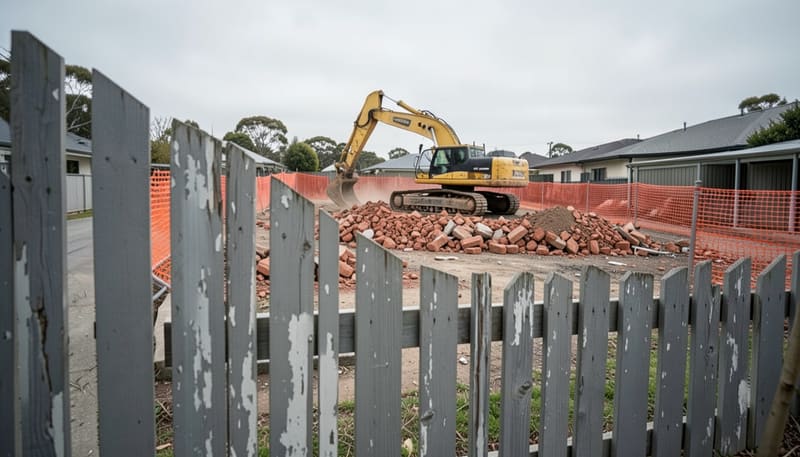
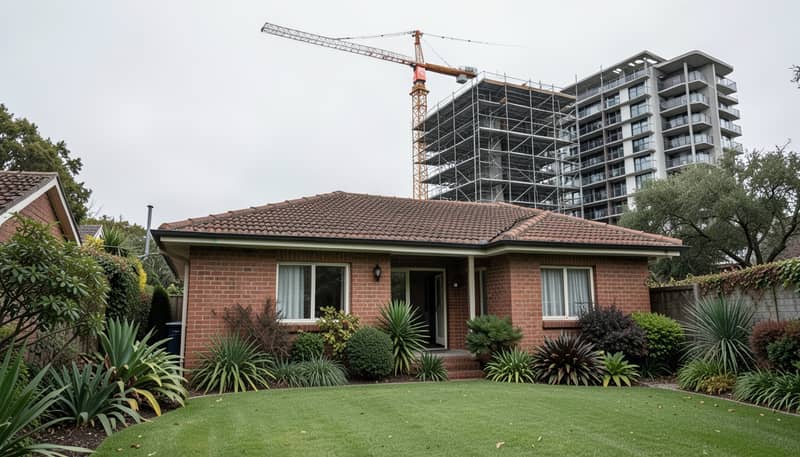
- The works create the risk. Demolition, excavation, piling and heavy plant are what put neighbouring footings, walls and paving at risk, so recording them is part of managing the job.
- It's a small cost next to a dispute. Arguing about cracks with no evidence on either side is slow and expensive for everyone.
Right of support in NSW
In NSW, section 177 of the Conveyancing Act 1919 provides a right of support for land. It's one reason excavation beside a boundary gets close attention. Councils also commonly include dilapidation conditions in development consents for excavation, demolition and piling near boundaries. This is general information, not legal advice.
What each party gets for the cost
The same inspection serves a different purpose depending on who commissions it.
Builder or developer
Evidence to answer damage claims, a record that satisfies the consent condition, and copies to lodge with the certifier or council.
Neighbour, own report
An independent record, from an engineer you chose, covering inside your home, with measured cracks you can rely on if damage appears.
Landlord
A dated record of the premises at lease start, which becomes the reference point for make-good at the end of the term.
Tenant
Evidence of the condition you took the premises in, so you aren't asked to fix defects that were already there.
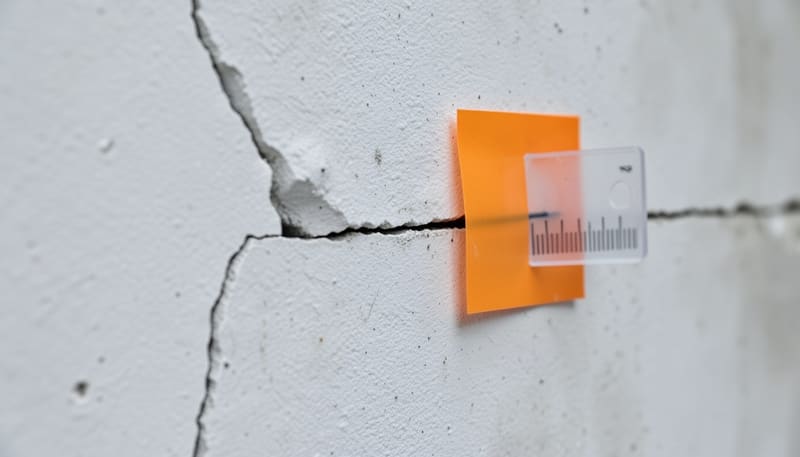
Whoever pays, the content is the same: located photos of each elevation and accessible room, a crack register with measured widths and lengths, other defects, site elements such as fences and retaining walls, and the engineer's signature. See a full example in our sample dilapidation report.
When is it worth a neighbour paying for their own report?
Often it isn't necessary, and sometimes it's very worthwhile. The builder's report exists to protect the builder. If it's thorough, includes inside your home, measures cracks and you receive a copy before works start, it already gives you a baseline.
| Builder's report | Your own independent report | |
|---|---|---|
| Engineer works for | The builder or developer | You |
| Who chooses the inspector | The builder | You |
| Inside your home | Depends on its scope and your access | Every accessible room you allow |
| Measured cracks | Depends on the provider | Yes, in a crack register (ours) |
| When you get a copy | If and when the builder shares it | Directly, when it's issued |
| Cost to you | Nothing | From $390 + GST (ours) |
Consider your own independent neighbour dilapidation report when:
- no one has offered to inspect your home before works start
- the builder's report is external-only or photo-only
- you haven't received a copy, or can't get one
- the works are high-risk: deep excavation, piling or a shared wall
- your home already has cracks you want measured and on record
If the builder has asked to inspect your home and you're unsure, read whether a neighbour can refuse a dilapidation inspection and what that means for you.
Commercial leases: does the landlord or tenant pay?
The lease decides. Some leases put the cost of a condition report on the tenant, some on the landlord, and some say nothing at all.
When the lease is silent, the party who wants the evidence usually commissions it. At lease start that's often the tenant, because a dated record limits what they can be asked to fix at make-good. At lease end it's often the landlord, to show what has changed. The two reports work as a pair: the lease-start record is the baseline, and the make-good inspection is compared against it.
Agree in writing who pays for each before you book. See our commercial dilapidation reports for lease start and make-good, or a building condition assessment if you need an engineer's view of a building's overall condition rather than a baseline record.
What does the paying party spend?
Our reports start from $390 + GST for a typical house, with a fixed quote within 1–2 business hours. The price depends on the building's size, the number of properties, whether inside access is available and the detail your consent condition asks for.
Published starting prices for a dilapidation report
- Building inspection companies$400–$445
- Other engineering firms$450–$950
- Omega (structural engineers)$390
On multi-property jobs, each neighbouring property gets its own report, so the total grows with the number of properties named in the condition. A post-construction dilapidation report is a second inspection, so budget for it at the start if your condition requires one. Read the full breakdown on our dilapidation report cost page.
Who gets a copy of the report?
The person who commissions the report receives it. Many consent conditions also require a copy to be given to each owner whose property was recorded, and sometimes to the council or certifier. For multi-property jobs, we issue a separate report per property, so each owner only receives the record of their own home.
Paying doesn't mean controlling the record
A report is only useful if it's accurate. The engineer records what is there, whoever pays the invoice, and a neighbour who receives a copy before works start can check it reflects their home.
Avoiding disputes about who pays
Do
- Read the condition wording before asking for quotes
- Agree in writing who pays for pre and post-construction reports
- Get one fixed quote covering every property named
- Give each owner a copy of their own record
Don't
- Assume the neighbour will share the cost
- Wait until works start to book and budget
- Use a firm that also quotes for repairs
- Leave make-good out of a commercial lease budget
Independent, whoever pays
We're engineering only. We inspect, record and report, and never quote for or carry out repairs, so the record has no stake in what happens next.
Not sure whether your project needs a report at all? Read when a dilapidation report is required. Ready to book a pre-construction dilapidation report for your neighbours, or your own record? Send the address, the works and any condition wording for a fixed quote.
Sources and standards referenced
- Conveyancing Act 1919 (NSW), section 177. Right of support for land