
The short answer
A dilapidation report in Sydney is a dated, engineer-signed record of a property's condition before nearby demolition, excavation or construction starts. Councils commonly make one a condition of development consent for excavation, demolition and piling near a boundary. Our structural engineers photograph every elevation and accessible room and measure existing cracks, from $390 + GST.
Dilapidation report Sydney: quick facts
- Typical properties
- Terraces, semis, older brick homes, apartments and strata
- Common triggers
- Basements, knock-down rebuilds and apartment construction
- Ground
- Varies: sandstone in many areas, shale and clay soils in others
- Approvals
- Dilapidation conditions are common in development consents
- Signed by
- A structural engineer
- Price
- From $390 + GST, fixed quote in 1–2 business hours
Why do Sydney homes need a dilapidation report?
Because Sydney builds in tight spaces. Knock-down rebuilds, basement excavations and new apartment blocks often go in within a metre or two of homes that are decades old, and many inner-suburb terraces and semis share a party wall with the property being redeveloped. A dated, measured record made before works start is the simplest way to separate old cracks from new ones.
Terraces and semis
A shared party wall means works next door act directly on your structure. We record both faces where access allows, plus the rooms either side.
Older brick homes
Federation and inter-war brick homes can already have cracks, sagging lintels or sticking doors. Each is measured and photographed so it isn't mistaken for new damage.
Sandstone walls and rock
Sandstone boundary walls, retaining walls and rock faces are recorded with their existing joints, lean and weathering.
Apartments and strata
Facades, car parks, common property and individual lots beside a development, with a separate report for each owner.
What works trigger a dilapidation report in Sydney?
Any work that could plausibly affect a neighbouring property. In Sydney, common triggers include:
- Basement excavation for houses, apartments and car parks, often close to the boundary
- Rock breaking, saw cutting and piling through sandstone and shale
- Knock-down rebuilds on narrow lots beside older homes
- Alterations to a shared party wall on a terrace or semi
- Apartment and mixed-use construction, with cranes and heavy trucks working beside existing buildings
Not sure your project needs one? Read when a dilapidation report is required.
How do basements and sandstone affect neighbouring homes?
In two ways: vibration while rock is broken or cut, and loss of support if an excavation sits close to a neighbour's footings. Both are why Sydney basement projects commonly carry dilapidation conditions.
Sydney's ground can change over short distances. Much of the city sits on sandstone, which usually has to be broken or saw cut to form a basement. Other areas sit on shale, which weathers to clay soils that can shrink and swell with the seasons. The geotechnical report for the works describes the conditions at a particular site.
Is the neighbour's footing within the zone of influence?
A neighbour's footings above the 45° line are within the zone of influence. Those are the properties to record first, and the ones to consider for crack monitoring while the dig is open.
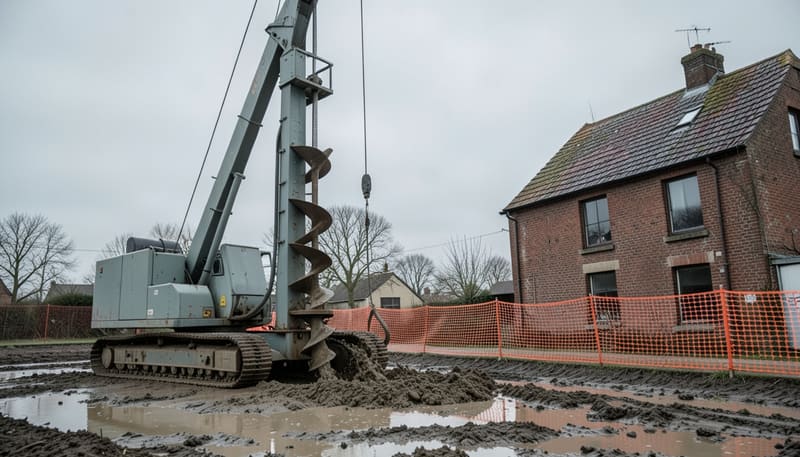
Book before the rock breaker arrives
Once demolition, rock breaking or excavation starts, the baseline is gone. Book the inspection as soon as your start date is set, and allow time for neighbours to agree on access.
Do Sydney councils require dilapidation reports?
Often. Councils commonly include dilapidation conditions in development consents for excavation, demolition and piling near boundaries. The condition usually names the adjoining properties to be recorded, when the reports must be completed and who receives copies. Read the exact wording in your consent, and send it with your quote request so the scope matches.
Right of support in NSW
Section 177 of the Conveyancing Act 1919 provides a right of support for land. It's one reason excavation beside a boundary is taken seriously. A dilapidation report doesn't decide who is responsible for damage, but it gives everyone the same evidence to work from. This is general information, not legal advice.
Building next to a neighbour who's worried about access or cost? Read who pays for a dilapidation report and what happens if a neighbour refuses.
What do we record in a Sydney dilapidation report?
Everything a later damage claim could point to, located and photographed so it can be found again:
- Each adjoining home, inside and out, with numbered photos of every elevation and accessible room
- Both faces of shared party walls where access allows, plus the rooms either side
- A crack register giving each crack's location, width, length and orientation, linked to a photo
- Sandstone and masonry boundary walls, retaining walls, fences, paving and pools near the works
- Footpaths, kerbs and crossovers at the frontage when your conditions require them
- Strata common property and individual apartments beside larger developments
There's no Australian Standard written specifically for dilapidation reports. Reports commonly reference AS 4349.0, and crack severity is commonly rated with the damage categories in AS 2870. See how it comes together in our sample dilapidation report, or read which standards reports reference.
Strata building next door?
Contact the strata manager early. Access to common property is usually arranged through them, while each apartment owner decides on access to their own lot. See our commercial and strata reports.
How a Sydney dilapidation report works
Six steps from consent to final comparison. The first five happen before anyone touches the site.
- As soon as you have consent
Check your development consent
Find the dilapidation condition. It usually names the adjoining properties to record, when the reports are due and who receives copies.
- Weeks before works
Send the address and condition wording
We reply with a fixed quote within 1–2 business hours, covering each property and any public assets the condition names.
- Before the inspection
Arrange access with neighbours
A short letter explaining that the report protects both parties helps. For apartment buildings, contact the strata manager early.
- Before demolition or excavation
Inspect and record
Each property is photographed inside and out, existing cracks are measured, and shared walls are recorded from both sides where access allows.
- Before works start
Issue signed reports
Each owner receives the record of their own property. Lodge copies with your certifier or council if your consent requires it.
- During and after works
Monitor and compare
Add crack monitoring for close neighbours during rock breaking or excavation, then a post-construction report when works finish.
How much does a dilapidation report cost in Sydney?
Our Sydney dilapidation reports start from $390 + GST for a typical house, signed by a structural engineer. The fixed price depends on the property's size, how many properties your consent names, inside access and any public assets to record.
See how dilapidation report pricing works, then get a fixed quote. Doing the works? Start with a pre-construction report. Works starting next door? Get your own neighbour report. Already seeing new cracks? Read what to do if construction next door damages your house.
Standards and legislation referenced
- Conveyancing Act 1919 (NSW), section 177. Right of support for land
- Standards Australia, AS 2870-2011 Residential slabs and footings. Appendix C, Table C1: classification of damage to walls
- Standards Australia, AS 4349.0-2007 Inspection of buildings, Part 0: General requirements